We are NOT authorized by Govt of India for Yellow Fever Vaccination

Friday, August 28, 2015

Uganda using Twitter to detect disease outbreaks

– With porous borders and disease outbreaks inside and around Uganda, authorities are using Twitter to speed up response times
By Halima Athumani
KAMPALA, Uganda  – Uganda’s Ministry of Health is using Twitter to collect real time information about disease outbreaks in the East African country.
In an exclusive interview with Anadolu Agency at the Public Health Emergency Operations Center in Kampala, Dr. Issa Makumbi said: “We set up this center in July 2013 because of the constant disease outbreaks and we needed to prepare and cope with them more effectively and efficiently.”
The World Health Organization’s Department of Global Capacities, Alert and Response established the Public Health Emergency Operations Center Network in order to strengthen global collaboration and WHO member states’ capacity for effective responses to public health hazards.
“Ebola and Marburg were rampant at the time and since then we have had five Ebola outbreaks and three Marburg outbreaks,” Dr. Makumbi, the center’s manager, said.
Other disease outbreaks plaguing Uganda within its borders include meningitis, cholera, yellow fever, typhoid and Crimean-Congo hemorrhagic fever.
Uganda is currently battling a malaria outbreak in its north that has left over 167 people dead and another 22,000 infected.
Dr. Makumbi said: “These diseases are not going to go away tomorrow, so the solution is to detect and respond to them early so as to stop their transmission to vulnerable communities.”
He added that Uganda adheres to International health regulations that call for the control of disease outbreaks so as to maintain national public health security and in turn contribute to global health security.
Sam Kasozi, an information systems expert at the Emergency Operations Center, told Anadolu Agency: “With our Twitter handle @MOHUg_PHEOC we follow many local and international accounts but with an emphasis on those that pertain to Uganda and outbreaks.”
Inside the center, there are two large screens, one airing normal television and the other Twitter.
“We decided to adopt TweetDeck because it helps us customize specific search words such as ‘disease outbreaks Uganda’,” Kasozi told Anadolu Agency. 
“So we have priority diseases and our surveillance focuses on Marburg, meningitis, yellow fever, West Nile virus and Rift Valley virus,” he said.
The next Twitter column is for prevailing outbreaks such as malaria, cholera, rubella, Middle East Respiratory Syndrome (MERS) and measles.
“We separate them so that we can easily pick out an outbreak and quickly respond to it,” he said.
The last column is used to detect International disease outbreaks especially from neighboring countries, such as Kenya.
These include a cholera outbreak in South Sudan, another cholera outbreak in the Democratic Republic of Congo – due to the influx of refugees from Burundi – and Ebola in West Arica, among others.
The Emergency Operation Center is under the direct control of the Director General of Health Services in the Ministry of Health.
Kasozi said that, “If something comes up and it is newsworthy, we immediately communicate it to the surveillance division which takes immediate action and prepares to get on the ground.”
The center also has a laboratory specialist and a geographical information system specialist who, immediately after a disease outbreak is confirmed in any part of the country, finds the exact location of the outbreak before the rapid response teams are sent to investigate and respond to the situation.
Apart from Twitter, Uganda also gets information about disease outbreaks from the World Health Organization, the Center for Disease Control in the United States and ProMed.
Dr. Makumbi said that Uganda remains vulnerable to disease outbreaks because it is located near a hotspot known as the Congo basin, “which is a pool of new and old germs which can cause outbreaks, especially from wild animals.”
Uganda is also within the yellow fever and meningitis belts, which both produce outbreaks.
With regards to diseases imported from neighboring countries, Dr. Makumbi said that: “Uganda has porous borders where anyone can come in with any disease and they won’t be noticed.”

Will NIGERIA become POLIO FREE ?

Infographic Details

On the Road to a Polio-Free Nigeria:
It's been one year since Nigeria's last reported case of polio. Where are we on the road to a polio-free Nigeria?
Rotary has donated over $207M to end polio in Nigeria.
Over 200,000 health workers immunize 230 million children in Africa.
No Stopping. Nigeria must go 2 more years without a new polio case.
  • 1988 - The Global Polio Eradication Initiative launches. Nigeria hits the road with some 30,000 cases of wild poliovirus.
  • 2014 - Nigera records its last polio case for the year on 24 July.
  • 2015 - The World Health Organization may remove Nigeria from its list of polio-endemic countries this year.
  • 2017 - Arrive at a certified polio-free Africa?
Join us in the fight to end polio at endpolio.org.

Wednesday, August 26, 2015

Swine Flu, Congo Hemorrhagic fever in Gujarat - Promed report

Published Date: 2015-08-24 17:21:41
Subject: PRO/AH/EDR> Crimean-Congo hem. fever - India (06): (GJ) 
Archive Number: 20150824.3598944
CRIMEAN-CONGO HEMORRHAGIC FEVER - INDIA (06): (GUJARAT)
*******************************************************
A ProMED-mail post
http://www.promedmail.org
ProMED-mail is a program of the
International Society for Infectious Diseases
http://www.isid.org

Date: Sat 22 Aug 2015
Source: The Times of India [edited]
http://timesofindia.indiatimes.com/city/rajkot/Woman-dies-of-Congo-fever-in-Kutch/articleshow/48614990.cms


A Kutch woman succumbed to Congo fever in Rajkot, while another woman from Dwarka died of swine flu in Jamnagar on Friday.

A 50-year-old woman from Bharudiya village of Bhachau taluka of Kutch succumbed to Crimean Congo hemorrhagic fever (CCHF), commonly known as Congo fever on Friday morning [21 Aug 2015] in a private hospital in Rajkot. According to Dr Pankajkumar Pandey, chief district health officer (CDHO), Kutch, the woman was tested positive for Congo [Crimean-Congo Hemorrhagic] fever [during July 2015] and was brought to hospital in Rajkot where she died on Friday [21 Aug 2015].

[Also during July 2015], a 55-year-old woman from Rampara Vekra village in Mandvi taluka of Kutch district died of Congo fever. "We have deployed medical teams in the village to determine whether other people are having symptoms of Congo fever. A team of veterinary officials are also camping [temporarily living] in the village as well," said a health official from Kutch district.

Meanwhile, a 55-year-old woman from Dwarka succumbed to H1N1 virus -- commonly known as swine flu -- in the civil hospital of Jamnagar [Thu night 20 Aug 2015].

--
Communicated by:
ProMED-mail from HealthMap Alerts


[This is the 2nd report of CCHF cases from the Kutch district in 2015. There was 1 previous suspected case and 2 confirmed cases, also from the Kutch district of Gujarat state reported on 18 Feb 2015, 29 Mar 2015, and 16 July 2015. CCHF virus is endemic in Gujarat state, and human cases have occurred there as recently as last year (2014). The way in which this and previously reported CCHF virus infections were acquired is not stated. Perhaps the veterinary and public health teams investigating the situation in the village will be able to determine the source of infection. As noted in ProMED-mail archive no. 20150128.3124546, the virus is transmitted by _Hyalomma_ spp. ticks or through contact with infected human blood or animal blood and tissues during and immediately after slaughter. The majority of cases have occurred in people involved in the livestock industry, such as agricultural workers, slaughterhouse workers, and veterinarians. Exposure in health care facilities also occurs. The length of the incubation period depends on the mode of acquisition of the virus. Following infection by a tick bite, the incubation period is usually 1-3 days, with a maximum of 9 days.

The CDC states, "Crimean-Congo hemorrhagic fever (CCHF) is caused by infection with a tick-borne virus (_Nairovirus_) in the family _Bunyaviridae_. The disease was initially characterized in the Crimea in 1944 and given the name Crimean hemorrhagic fever. It was then later recognized in 1969 as the cause of illness in the Congo, thus resulting in the current name of the disease.

The virus is sensitive in vitro to the antiviral drug ribavirin. It has been used in the treatment of CCHF patients, reportedly with some benefit (http://www.cdc.gov/vhf/crimean-congo/). However, since the patient died so soon after admission, effective use of the drug in the treatment of the case above would not have been possible.

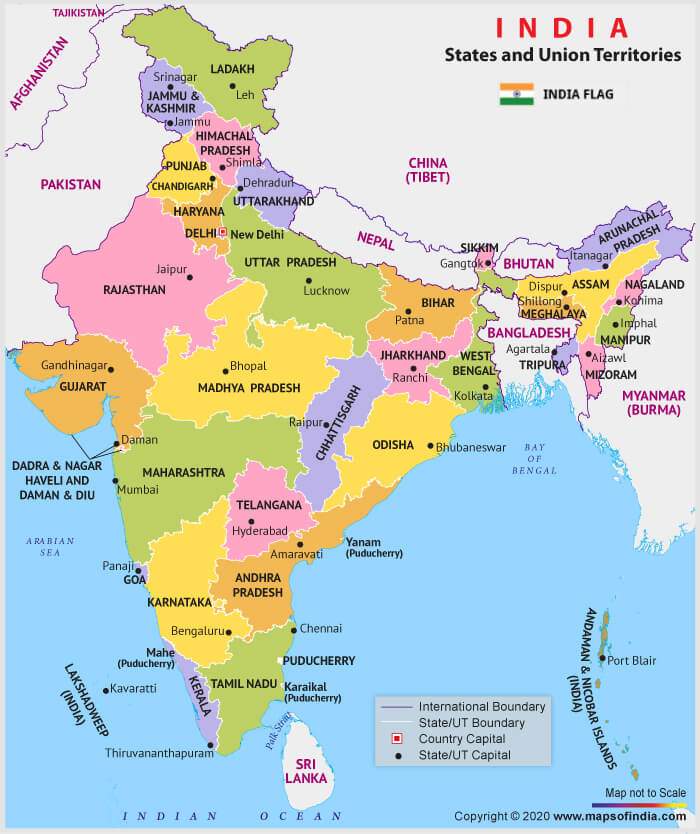
A map of the states and territories of India showing the location of Gujarat in the northwest can be accessed at http://www.mapsofindia.com/maps/india/india-political-map.htm, and a HealthMap/ProMED-mail map at http://healthmap.org/promed/p/302. - Mod.TY]

Tuesday, August 25, 2015

Japanese Encephalitis alert in Meghalaya - Promed Report

Published Date: 2015-08-19 20:14:24
Subject: PRO/AH/EDR> Japanese encephalitis & other - India (11): (ML) 
Archive Number: 20150819.3590146
JAPANESE ENCEPHALITIS AND OTHER - INDIA (11): (MEGHALAYA)
*********************************************************
A ProMED-mail post
http://www.promedmail.org
ProMED-mail is a program of the
International Society for Infectious Diseases
http://www.isid.org

Date: Tue 18 Aug 2015
Source: Mid Day via Google Alerts [edited]
http://www.mid-day.com/articles/japanese-encephalitis-alert-in-meghalaya/16465160


Meghalaya has sounded an alert for Japanese encephalitis [JE] after 3 people died of the disease and another 6 were tested positive for the virus, an official said on Tuesday [18 Aug 2015].

"We have sounded a health alert in the state after 3 people died of Japanese encephalitis and 6 people were tested for the virus," Director of Health Services R. Wankhar said.

State Health and Family Welfare Minister Alexander Hek, after a meeting with medical officials, said the government has taken steps to contain the spread of the virus. Health officials will also undertake fogging in various localities to tackle _Culex_ mosquitoes, which are responsible for the outbreak of Japanese encephalitis, and their breeding grounds.

"We have directed the hospital authorities to provide adequate treatment and medicines to those suffering from the disease," Hek said.

Encephalitis results in inflammation of the brain, affecting the patient's central nervous system. It is caused by bacterial or viral infections of the brain, injection of toxic substances, or increased complications of an infectious disease. 

While the lesser symptoms include headache and fever, the more severe ones cause seizures, confusion, disorientation, tremors, and hallucinations. Japanese encephalitis syndrome is [caused by] a mosquito-borne virus. While humans are the dead-end hosts of the virus, pigs act as amplifying hosts that aid in spread of the virus.

--
Communicated by:
ProMED-mail


[The 3 cases mentioned above are doubtless the same 3 that were reported on 15 Aug 2015 (ProMED-mail archive no. 20150815.3581103), but the other 6 positive cases are new, suggesting that JE virus infections are a bit more frequent than earlier indicated. There have been numerous JE cases in northeastern India again in 2015. Since this area is in the JE virus endemic area, with human cases occurring every year, these additional cases are not surprising.

Maps of India can be seen at http://www.mapsofindia.com/images2/india-map.jpg and http://healthmap.org/promed/p/306, and a HealthMap/ProMED-mail map can be accessed at http://healthmap.org/promed/p/319. - Mod.TY]